How to dictate a text message on a Mac
You can type iMessages with your voice on a Mac for free. This guide shows how to dictate in Messages, and how to send an audio message instead.
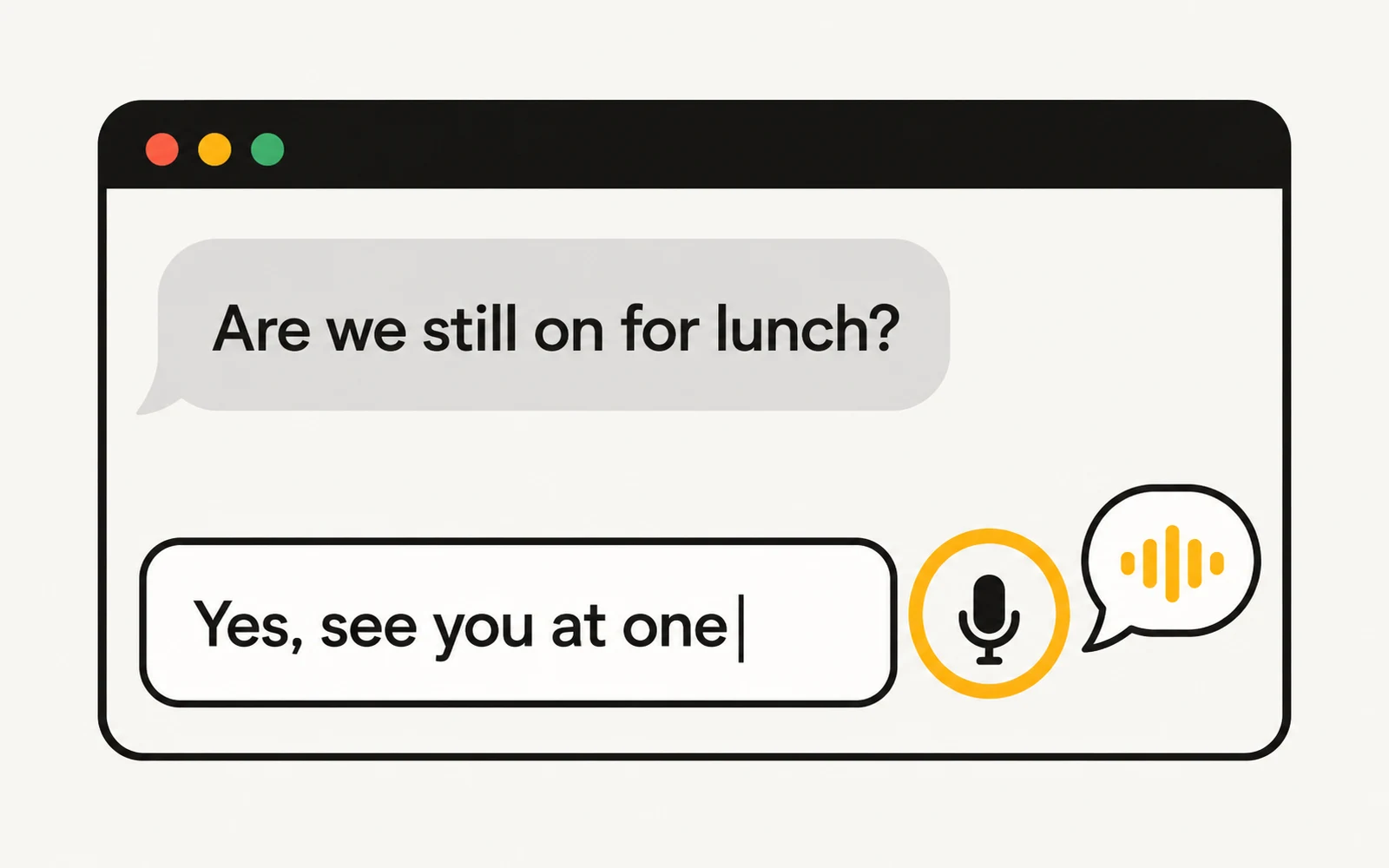
You can dictate a text message on a Mac with Apple Dictation. It is free, and it works in the Messages app. Texts to phones without iMessage also need your iPhone, with Text Message Forwarding turned on.
We have built Roar, a dictation app that is light years ahead of Apple Dictation. There's a link to try Roar for free at the end of this article.
How do I dictate a text in iMessage on a Mac?
Time needed Less than 1 minute.
- Open the Messages app, and click the conversation in the list on the left.
- Click in the message field at the bottom of the window.
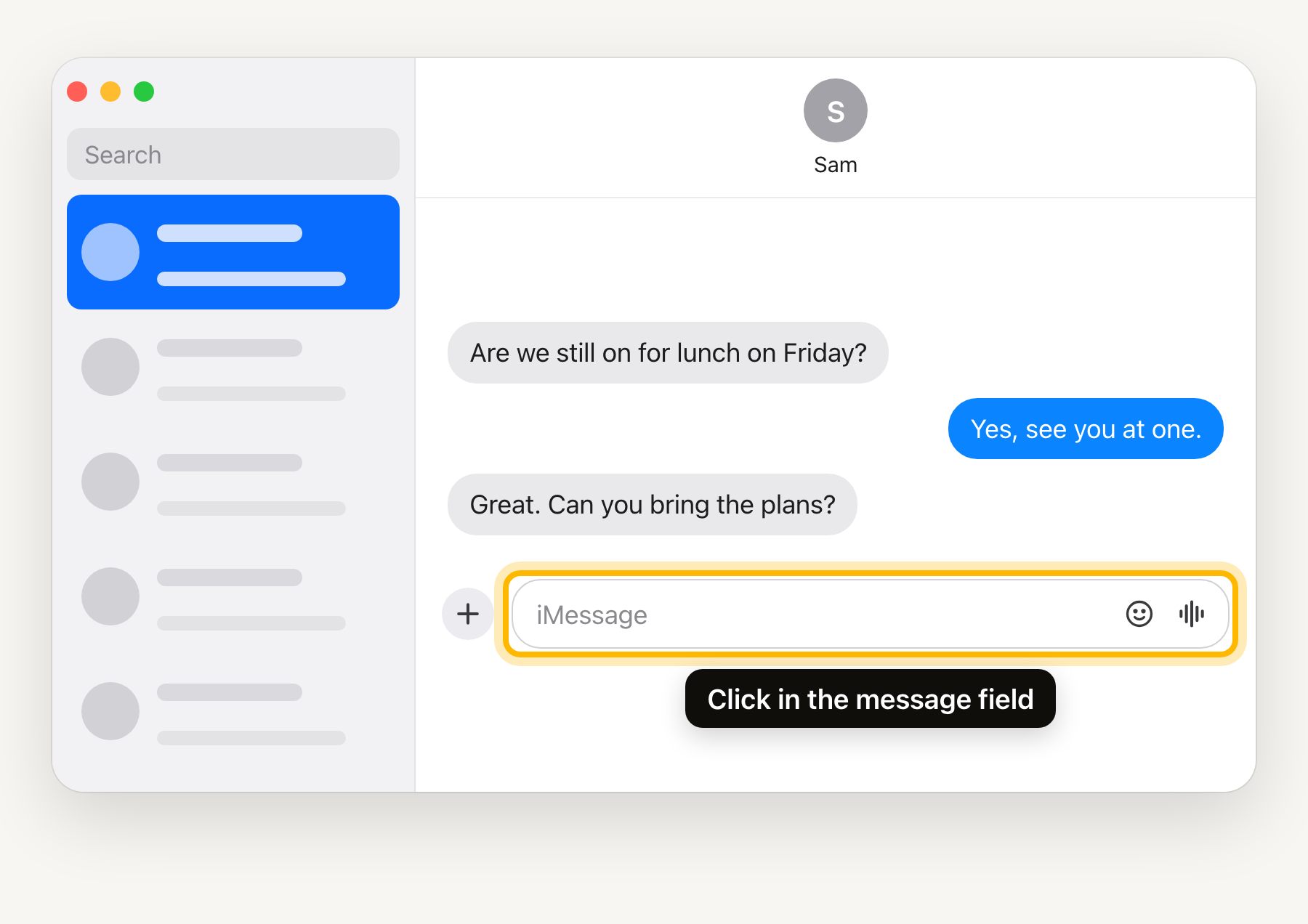
- Press the Microphone key once. On most Mac keyboards from the last few years, the F5 key has a small microphone on it. This is the Microphone key.
- When a small microphone appears next to your cursor, start talking.
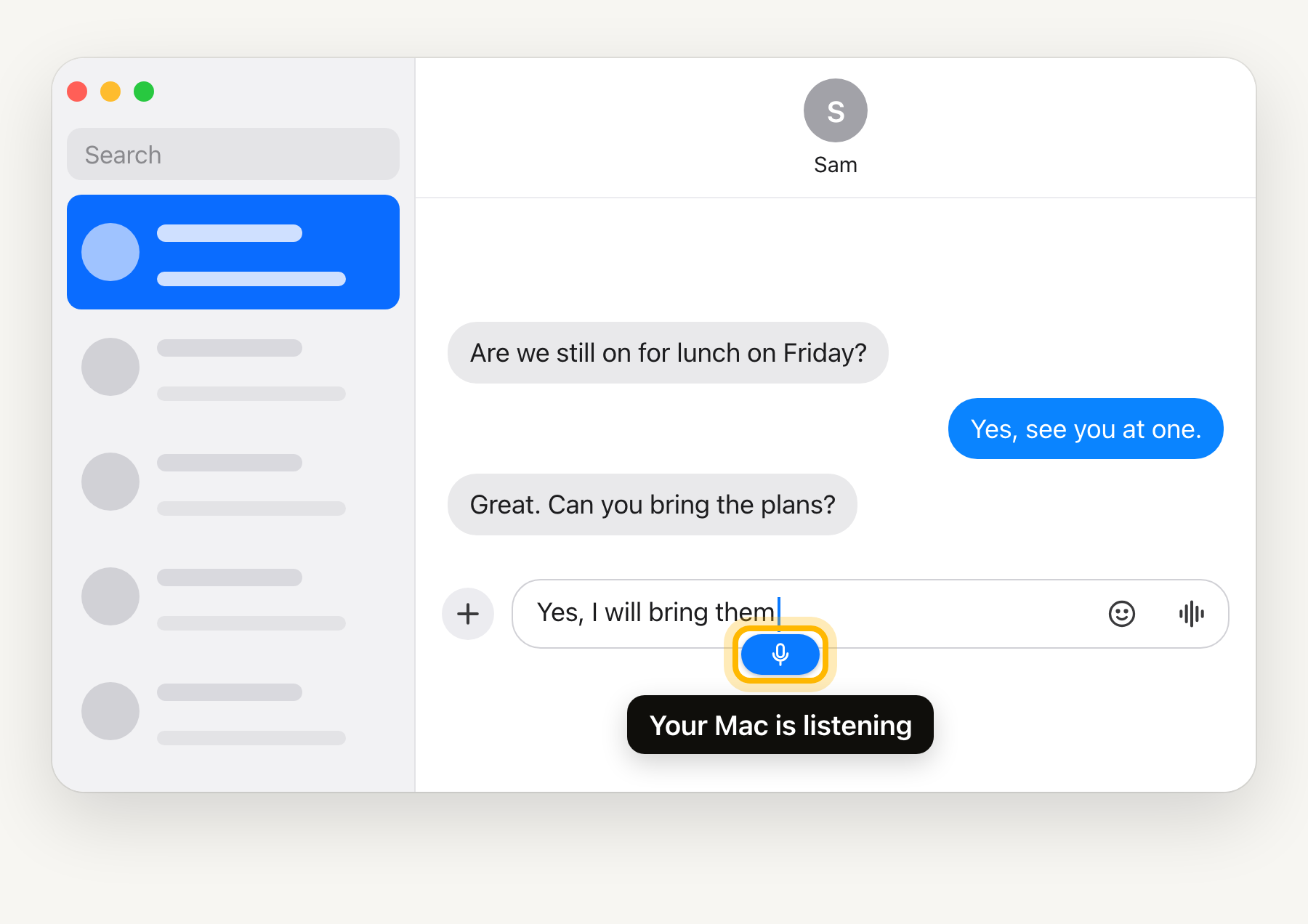
- When you finish, press the Microphone key again, or press Escape.
- Read the message and fix any mistakes. Then press Return to send it.
Dictation never sends a message by itself. You always press Return to send it, so you have time to check it first.
On a Mac with Apple silicon, you can type while Dictation is listening. You don't need to stop Dictation first. So you can fix a name with the keyboard and keep talking.
Don't hold the Microphone key down. If Siri is turned on, holding the key opens Siri instead.
How do I enable text dictation on a Mac?
You turn on Dictation in System Settings, not in Messages. It is a setting for your whole Mac. Once it is on, it works in Messages and in most other apps.
- Click the Apple logo in the top-left corner of your screen. Then click System Settings.
- In the list on the left, click Keyboard. You may need to scroll down the list to find it.
- Scroll down the Keyboard page until you see Dictation. Click the switch to turn it on.
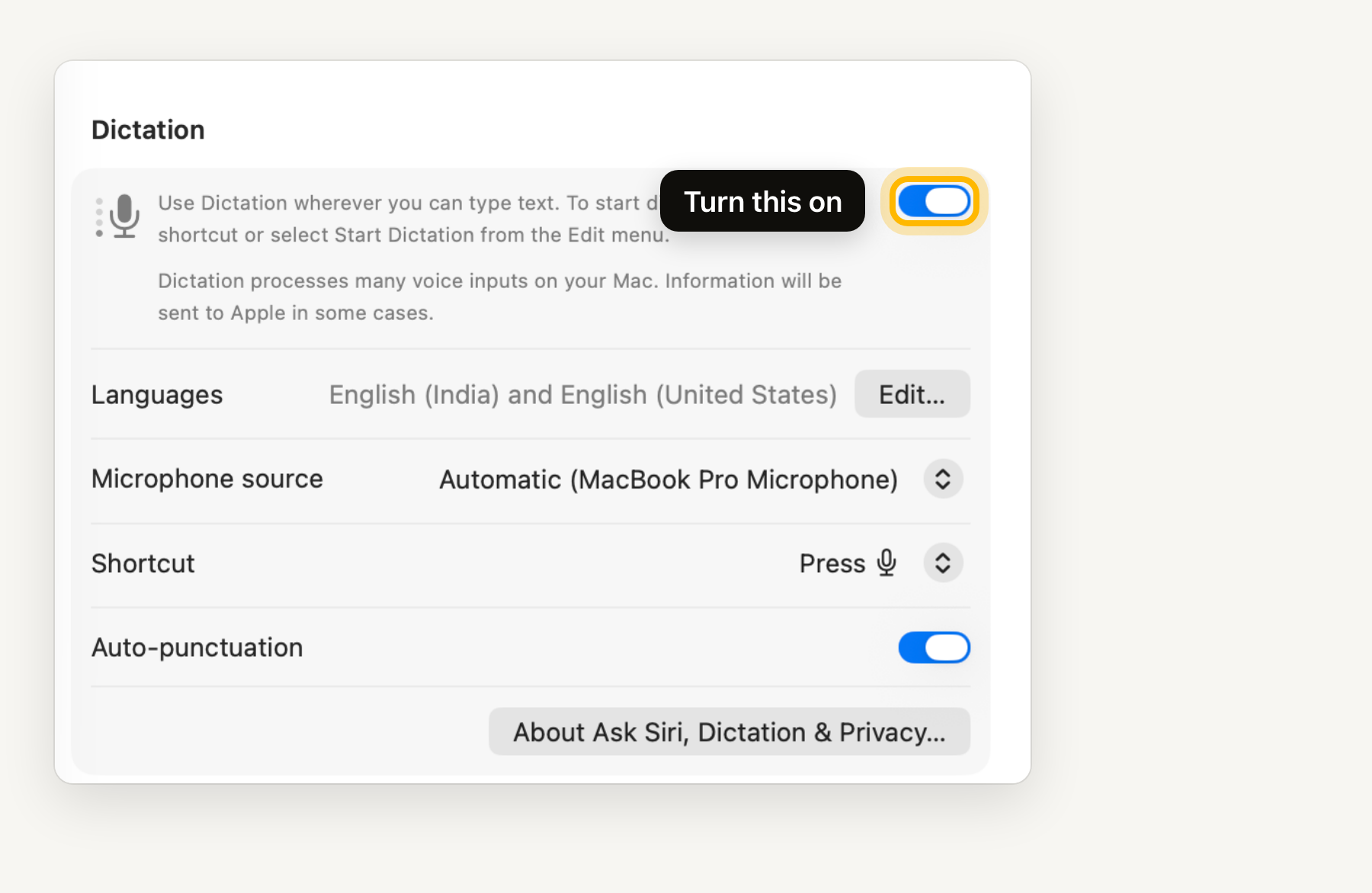
- Your Mac asks if you want to turn on Dictation. Click Enable.
Our guide on how to dictate on a Mac shows every step with pictures.
What is the voice to text shortcut on a Mac?
The shortcut is the Microphone key, usually F5. Press it once and let go.
If your keyboard has no Microphone key, you have two other ways:
- Click Edit in the menu bar at the top of the screen, then click Start Dictation.
- Choose your own shortcut. On the Keyboard page in System Settings, under Dictation, click the menu next to Shortcut and pick one, such as pressing the Control key twice.
How do I add punctuation and emoji when I dictate a message?
Apple Dictation adds most commas, periods and question marks for you. When it misses one, say it out loud, like "comma" or "question mark".
For an emoji, say its name and the word emoji, like "heart emoji" or "car emoji".
Our list of Mac dictation commands has the rest.
How do I start a new line in iMessage on a Mac?
Press Option + Return or Shift + Return. Return on its own sends the message.
Can I send an audio message instead of a text?
Yes. Messages on a Mac can record your voice and send the recording. This is a different feature from Dictation: the other person gets a recording, not text.
- Click in the message field. Leave it empty.
- Click the Record Audio button at the right end of the message field, and talk.
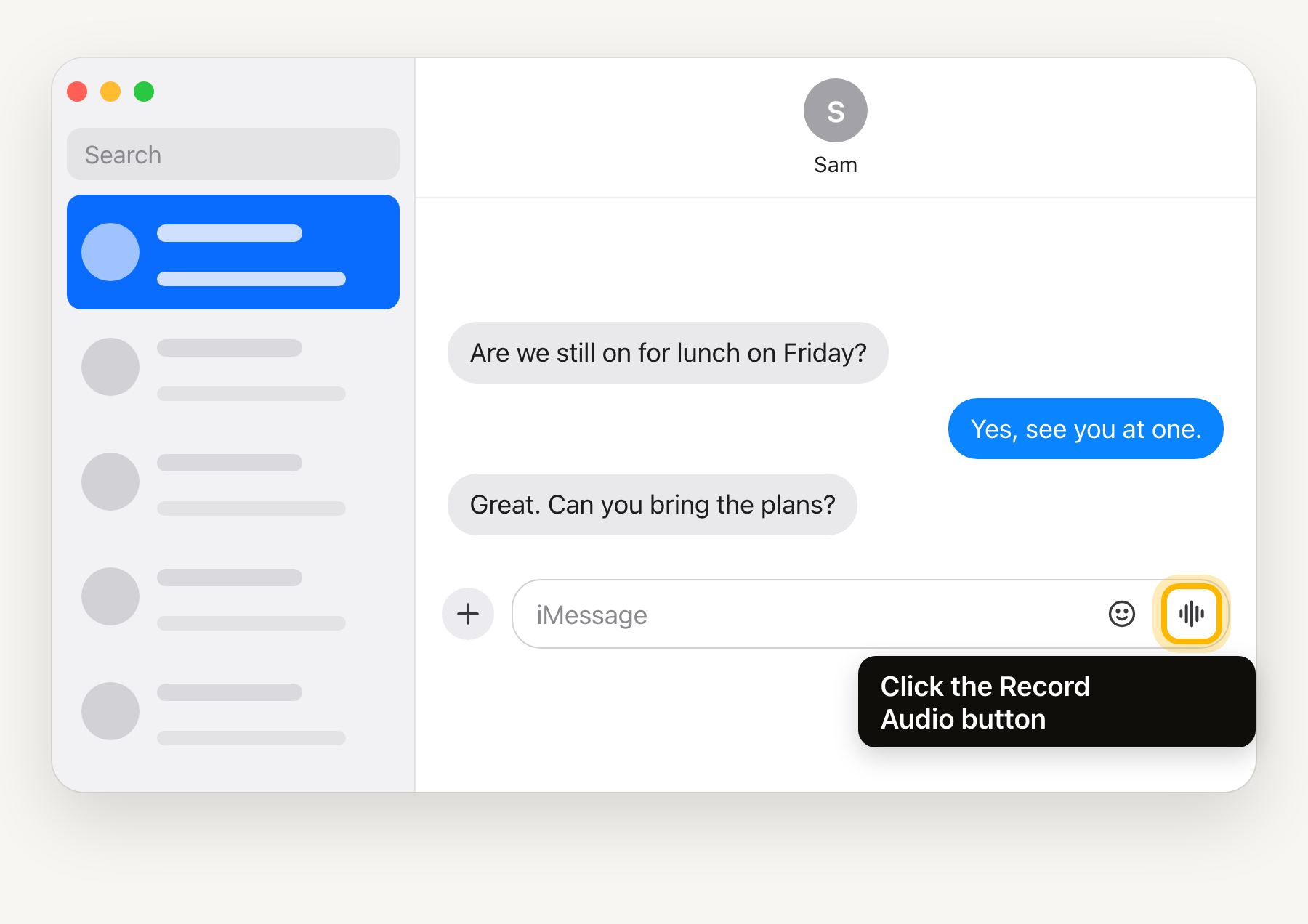
- When you finish, click the Stop button.
- Press Return to send it.
Your audio message disappears from the conversation on your Mac 2 minutes after you send it. The other person can still play it. To keep it in the conversation on your Mac, click Keep.
Can I send a message with Siri on my Mac?
Yes. If Siri is turned on, you can ask Siri to send a message for you. Apple gives this example: "Message Mom that I'll be late."
Siri is quick for short messages. For a longer message, or one you want to read before it goes, Dictation is better, because you can check the text before you press Return.
Why isn't dictation working in Messages on my Mac?
Check these four things in order.
- Your cursor is in the message field. Click inside the field before you press the key. If the cursor isn't there, Dictation has nowhere to put the words.
- Dictation is turned on. Open System Settings, click Keyboard, and scroll down to Dictation. The switch should be on.
- Voice Control is off. Voice Control is a different feature that lets you control your whole Mac by voice. While it is on, Dictation doesn't work. In System Settings, click Accessibility, then Voice Control, and turn it off.
- Your Mac is listening to the right microphone. On the Keyboard page, under Dictation, click the menu next to Microphone source and choose the microphone you speak into.
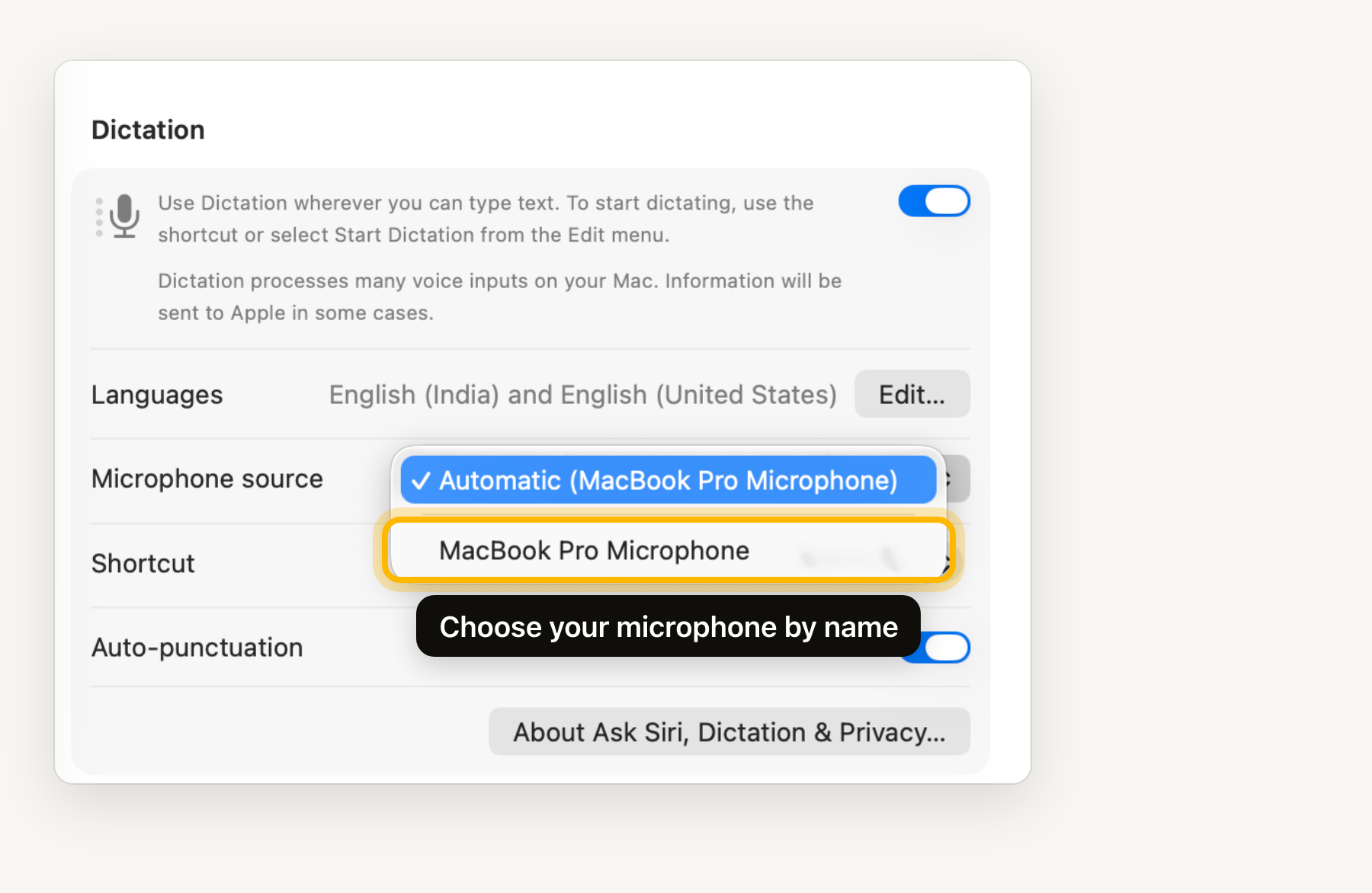
Dictation also stops by itself when you haven't spoken for 30 seconds. Apple designed it this way, and there is no setting to make it longer. If the small microphone has gone, press the Microphone key again.
For more fixes, see our guide to Mac dictation not working.
When should you pay for a dictation app?
For simple, short text, like a text message, a web search or a quick reply, Apple Dictation works fine in most cases.
A paid app makes sense if you write for hours every day, and if you don't want to fix the dictation errors that Apple Dictation makes.
We've built Roar, the best way to write with your voice. Roar cleans up and formats text based on where you're writing to retain your exact meaning. Think of how emails, LinkedIn posts and AI prompts all need to be formatted differently. It keeps your exact words, to the best extent possible.
Roar keeps no recordings of your voice and no transcripts on our servers. It does not use your data to train AI models. Roar works on Macs with macOS 14 Sonoma or later and Apple silicon (M1 or newer).
Your first 5 dictations on Roar are free. You can read how Roar works or download Roar for Mac.